A Callback to True, Heroic Fantasy
Quick Thoughts
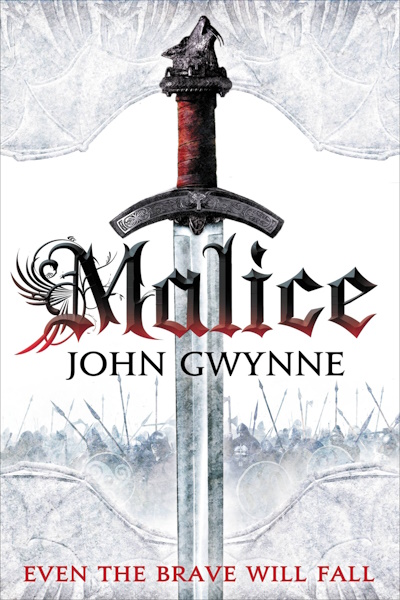
John Gwynne is one of those authors who has lived perpetually on my TBR for years, always just waiting in the proverbial wings despite many recommendations in his favor. That all changed when I ran my poll for which fantasy series I should tackle next and The Faithful and the Fallen won by a landslide. After reading it, it’s fairly clear to see why. Gwynne takes all the beloved but perhaps a bit tired and predictable story beats and tropes from classic fantasy and breathes new life into them. He instills his story with a certain energy and sense of uncertainty perfect for a modern audience, all while redressing the classic epic fantasy story in a new, viking inspired costume.
While Malice isn’t perfect and definitely suffers from some pacing issues, as well as the standard first installment in a fantasy series issue of throwing an absolute flood of information at the reader, it is a solid book. It kept me entertained throughout, delivered emotional moments with impressive force, established a new and interesting world, and planted the seeds of enough mystery to keep me invested in the story line going forward. I am definitely going to be continuing the series and highly recommend it to any fans of epic fantasy, especially if you love the idea of a Norse inspired setting.
Full Review
After reading several thoroughly “modern” fantasy books lately, the first installment in The Faithful and the Fallen series certainly felt like coming home after a long journey to your comfortable, familiar routine. Gwynne isn’t interested in telling a subversive or genre defying story here, he isn’t trying to challenge the reader or push the boundaries of the fantasy. What he is doing is taking what works about classic fantasy stories and building a new epic that feels familiar, yet fresh enough to be engaging.
If you’re a fan of epic fantasy from the likes of Tolkien, Williams, Brooks or Feist, you’re going to find a lot to love here. Gwynne takes many of the well worn tropes like secret chosen ones, animal companions, old mentors, mysterious prophecies, the inexplicable return of ancient evil, etc. and dusts them off for another go round. But what impressed me most about this first book is that he was able to employ all of those tropes without them ever really feeling repetitive. Instead, they felt like a respectful callback to what came before, while still keeping the story pointed straight ahead.
Fortunately, the direction Gwynne is steering the series seems to be a very worthwhile course. The Norse inspired worldbuilding is top tier and feels authentic and engrossing, while the larger plot of the series is both epic yet clearly tied to our protagonists on a deeply personal level. For a first book with so many POV’s, our main characters are all enjoyable and interesting. But more importantly, we are given plenty of time to watch them develop and get a real feel for who they are. For a debut novel, this book moves with a confidence in itself, taking plenty of time to breath and let the story unfold and build.
However, despite Gwynne’s impressive worldbuilding and character development, this also highlights the one major gripe I have with this novel. At times, the pace can feel uneven with some plot points feeling entirely too drawn out and others feeling too sudden. Certain plot beats feel repetitive and like they could have been condensed or more concisely conveyed to the reader. Combined with the large cast and at multilayered worldbuilding which details lineages and houses and religions and past events on top of the current story, the story can feel somewhat difficult to chew at times. It definitely gives a sense of being Gwynne’s first offering, one with great promise but still trying to find its footing a bit.
But overall, John Gwynne was a delight to discover. His unabashed love for epic, heroic style fantasy felt refreshing and scratched an itch I didn’t even realize I had. While I personally love and write Grimdark fantasy, my roots will always be firmly planted in the genre classics. So, for me, in a veritable sea of dark tales filled with gray morality and antiheroes, Malice was an enjoyable return to what made me fall in love with fantasy in the first place.