On The Banality of Violence
Quick Thoughts
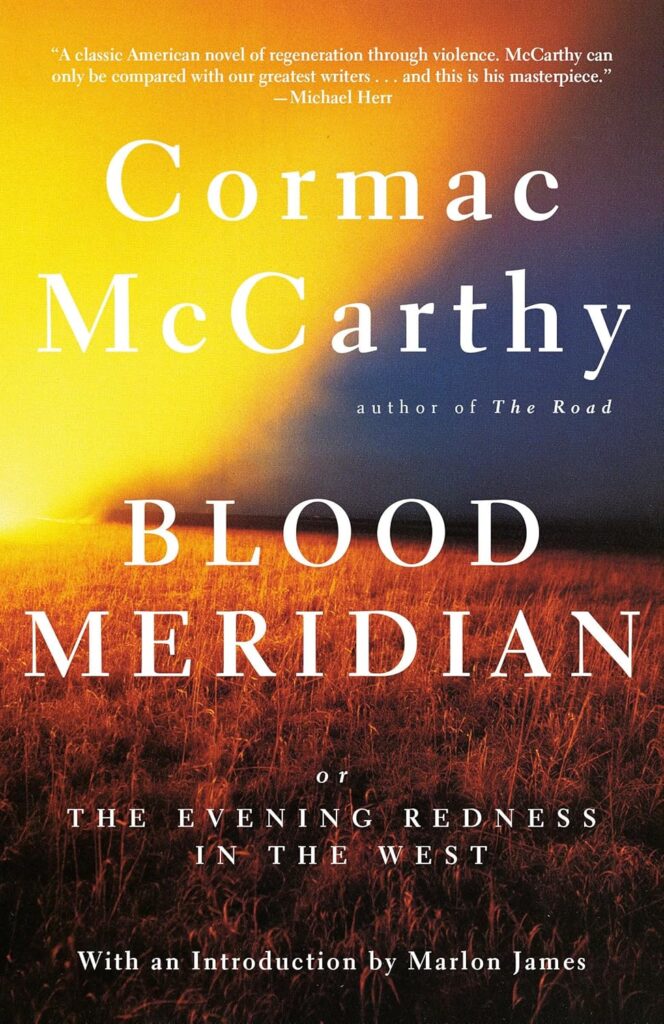
What makes a piece of art a classic? What makes a book important? Is the impact it had at the time of release enough, or does it need to continue to resonate with modern audiences across the ages for it to retain its status? That’s the question I found myself asking as I plodded my way through my first and likely last Cormac McCarthy novel, Blood Meridian. As someone who loves both westerns and classics, I thought this novel was going to be right up my alley, but found myself sorely disappointed. Blood Meridian strikes as the sort of “important for it’s time” classic that has coasted on it’s reputation into the modern day, but ultimately is lesser than it’s image in the public consciousness. I might recommend it a certain type of reader, for example someone interested in unusual writing styles or meditations on the depths of human depravity, but it’s certainly not a must read for me or a top tier example of it’s given genre.
Full Review
My biggest gripe with Blood Meridian is also likely one of its biggest selling points among its fans; the lack of structure. McCarthy seems far more concerned with presenting a meditation on human nature and the inherent darkness within ourselves than telling anything resembling a traditionally structured story. For much of the book, events seem to just happen, with little connective tissue to tie them together. And while this sort of gonzo, vibe driven narrative can and does work in other cases, I found myself yearning for more structure, more of a sense of the characters beyond the barely constructed cutouts that McCarthy presents us with.
Much has been made of the violence of this story, of the near constant and visceral descriptions of graphic, senseless violence. While I don’t deny that these scenes were strongly written, they again did little to advance the plot. Rather, they went on so long and occurred so often that they lost much of their impact. Perhaps it is a sign of the times that I as a reader found myself bored with reading about our central characters pillaging innocent villages and scalping people, but the fact remains the same. Violence in a story is only useful in what it accomplishes for the narrative, and in this case, it felt like it accomplished very little beyond the shock value.
To be fair to the man, McCarthy as a writer is not without his strengths. He is at his strongest when he is writing vivid descriptions of landscapes, people, or events from a distance. Several times in the book, I found myself impressed with his lengthy sequences describing battles, locations or simply a group of people. It is unfortunate then, that these rarely add much to the story, nor do they serve much purpose in the narrative. Mostly, it seems that McCarthy’s long, vivid descriptions were indulgences which he personally enjoyed but served to accomplish little.
Similarly, the character of the Judge is an often cited highlight of this book which I wholeheartedly admit was a powerful element. Few characters stand out in my mind as depraved and dark as Judge Holden. But beyond presenting a corrupting force for our main character and a literal personification of pure evil, the Judge often feels like he is meant to be disturbing with very little deeper substance. He is an engine of chaos and cruelty by design, but for a character so shocking in his actions he is remarkably uninteresting in retrospect.
This novel has been on my personal TBR for years, one of those I had always meant to get to but never quite found the time for. I had been told that the author was a genius, that the writing was both revolutionary and extremely impactful. So perhaps it was my own fault that my most consistent feeling while reading this book was a resounding sense of being profoundly underwhelmed. But the fact remains that for most of the time, Blood Meridian felt like a more of a slog than novels that are three to four times as long. I found myself repeatedly checking how many pages were left, desperately hoping to reach the end so I could move on to my next read. That alone tells you everything you need to know about my opinion of this book.